
Key insights
- ECB's de Guindos notes that the spillover impact of the Iran conflict on the Eurozone has been contained so far, with limited direct bank exposures. However, he warns of potential systemic stress from unraveling interconnected vulnerabilities, especially with high asset valuations. Rising oil prices due to the conflict could reignite inflationary pressures, potentially influencing ECB's monetary policy decisions. The conflict's duration and scope remain key risks.
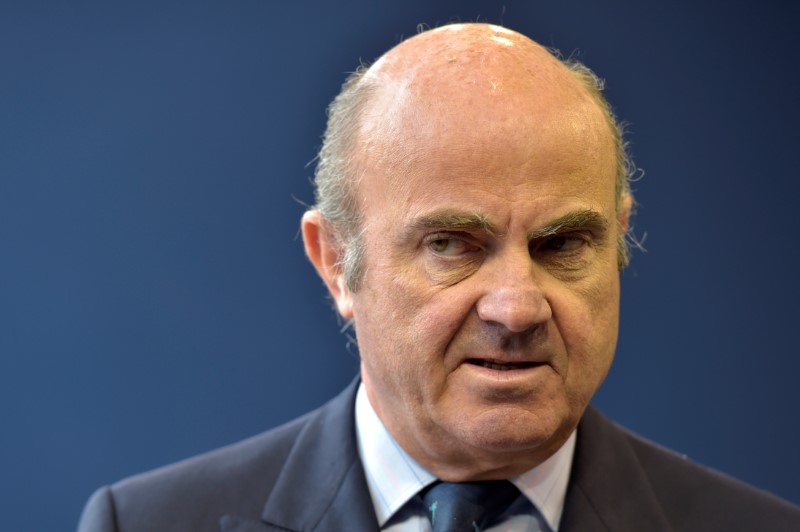
Investing.com - The conflict in the Middle East represents a threat to financial stability, and will depend on the scope and duration of the conflict, according to European Central Bank Vice President Luis de Guindos.
But, speaking at an event in Estonia, de Guindos said the spillover impact from the joint U.S.-Israeli war on Iran has been "contained" so far.
"Direct bank exposures to the region are limited, and the banking system is well positioned with strong profitability and robust capital and liquidity buffers," de Guindos said.
He added that markets in the European Union, including central counterparties whose services are focused on energy, have managed margin requirements "effectively" despite recent volatility in oil prices.
Markets, more generally, anticipate that the war itself will be "relatively short-lived," de Guindos noted.
However, the fighting could still trigger the "unravelling of interconnected vulnerabilities" and cause wider systemic stress, he flagged.
"It threatens to derail market sentiment at a time when asset valuations are high, potentially leading to a sharp repricing of risk for leveraged borrowers and sovereigns and amplifying stress in the non-bank financial sector," de Guindos said.
The comments come as Iran is reportedly reviewing a 15-point peace proposal from the U.S., while President Donald Trump is said to be urging aides to find a quick resolution to the conflict. But the two sides appear to be far apart in their demands for terms to halt hostilities, and the Pentagon has been moving to place more ground troops in the Middle East.
Oil prices once again floated above the $100 a barrel threshold on Thursday, and have remained well above pre-war levels of roughly $70 a barrel, fueling worries over reigniting inflationary pressures in countries around the globe -- including in the Eurozone currency area.
ECB President Christine Lagarde has suggested this week that policymakers could lift interest rates even in the event of "not-too-persistent" price gains in the region. The ECB left rates unchanged at 2% last week, but flagged increased inflationary pressures.
De Guindos said the war is expected to push up energy prices and drive inflation above the ECB's 2% target in the near term, although the central bank is "well positioned" to navigate an uncertain period for monetary policy.
But if the energy shock proves more persistent than currently anticipated, it may result in higher inflation and lower growth in Europe, he warned.
"[T]he medium-term implications of the war will depend on how much the war spreads and how long it lasts, and on the intensity and duration of the energy shock, as well as its propagation to consumer prices and the economy via indirect and second-round effects," de Guindos said.