
Key insights
- Chinese-made robots outperformed human runners in a half-marathon, highlighting China's rapid advancements in robotics and automation. This signals a potential shift in the global labor market as robots become more capable of performing complex physical tasks. The development could lead to increased automation in manufacturing and other sectors, potentially impacting employment in the US.
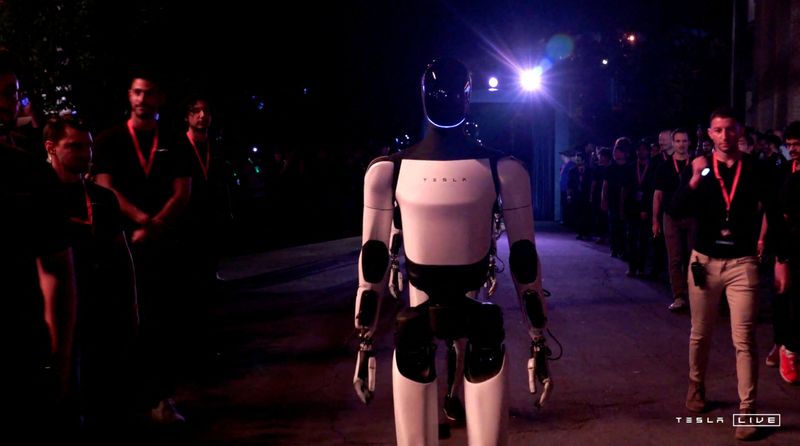
Investing.com -- The rapid evolution of China’s robotics industry was on full display in Beijing on Sunday, as a fleet of domestically produced humanoid robots demonstrated a significant leap in athleticism by outpacing professional human runners during a half-marathon event.
The performance marked a dramatic reversal from the race’s inaugural edition just one year ago, which was plagued by technical failures, with many machines struggling to even clear the starting line.
This year, the number of participating robots swelled to over 100, with several units showing speed and stability that rivaled or exceeded professional human athletes.
The winning unit, developed by Chinese smartphone giant Honor, crossed the finish line in 50 minutes and 26 seconds.
Despite the robot requiring assistance to recover after a final-meter collision with a guardrail, its pace was significantly faster than the current world record for the half-marathon, showcasing a trajectory of advancement that has caught the attention of global observers.
Beyond the race track, the event underscores China’s broader national mandate to establish itself as the dominant force in the frontier humanoid robotics industry.
Beijing has aggressively implemented a suite of policy support measures, ranging from substantial industrial subsidies to massive infrastructure projects, all designed to foster a competitive ecosystem of local firms.
The industrial focus was prominently featured during China’s most-watched television event, the CCTV Spring Festival gala in February, which included sophisticated demonstrations of robotic dexterity.
As the technology moves from highly controlled martial arts displays to complex physical environments, the implications for the global economy are mounting.
The commercial deployment of humanoids remains in its early trial phases, but the rapid acceleration in their physical capabilities signals a potential seismic shift in the future of labor.
Robots could take on multiple roles, ranging from the automation of high-risk tasks to potential applications in industrial and defense sectors.