
Key insights
- Qnity stock rose 2% after announcing a collaboration with NVIDIA to accelerate AI-driven innovation in semiconductor and advanced electronics materials research. The partnership focuses on advancing materials research and development for next-generation AI and high-performance computing. This collaboration signals increased investment and innovation in the semiconductor space, potentially benefiting related US equities.
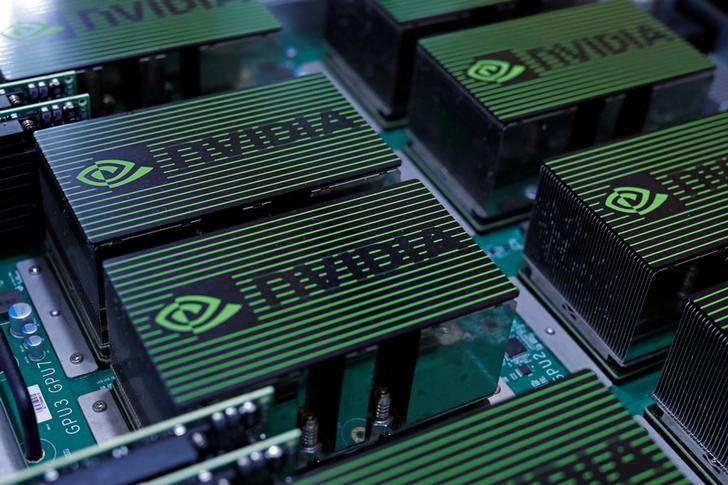
Investing.com -- Qnity Electronics (NYSE:Q) shares rose 2% Wednesday after-hours following the announcement of a collaboration with NVIDIA to accelerate AI-driven innovation in semiconductor and advanced electronics materials research.
The collaboration will bring accelerated computing to materials research across the semiconductor value chain, utilizing NVIDIA’s Nemotron 3 Nano, ALCHEMI BMD NIM, LAMMPS Kokkos, and CUDA-X accelerated Abaqus for modeling and simulation technologies.
The initiative focuses on advancing materials research and development to support next-generation AI, high-performance computing, and advanced packaging technologies. The partnership aims to address signal integrity challenges at higher speeds and densities, which are critical to system performance and reliability.
"As AI workloads continue to grow in scale and complexity, the demand for advanced materials that deliver higher performance, quality, and reliability is increasing across the industry," said Jon Kemp, Chief Executive Officer of Qnity.
The collaboration reflects Qnity’s focus on advancing materials innovation across the semiconductor ecosystem, from chip manufacturing and advanced packaging to high-speed interconnects and system-level integration.
Randy King, Chief Technology and Sustainability Officer at Qnity, said the accelerated modeling approach allows the company to compress development timelines and bring innovation to market faster while optimizing performance factors such as signal integrity, reliability, and manufacturability.
The partnership comes as demand for advanced semiconductor materials continues to grow amid expanding AI workloads across the industry.
This article was generated with the support of AI and reviewed by an editor. For more information see our T&C.