
Key insights
- Google declined a $2 billion U.S. quantum computing funding initiative due to conditions perceived to slow R&D. This decision, shared by other major tech firms, highlights a tension between government-imposed timelines and the rapid innovation pace required in cutting-edge technology. While Google seeks government partnership in other areas, its stance suggests a preference for less restrictive research collaborations over conditional grants, potentially impacting the broader U.S. quantum sector's development trajectory and its competitive standing against China.
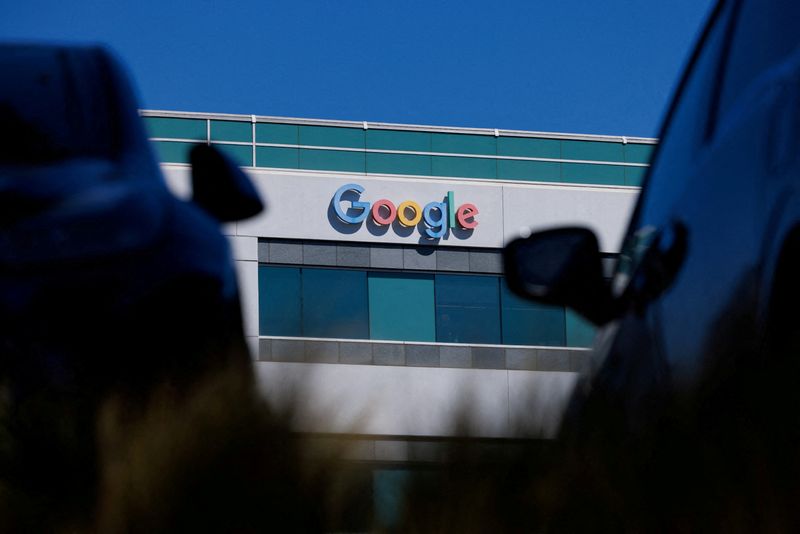
Investing.com -- Google, a major player in quantum computing, declined to participate in the U.S. government's recent $2 billion funding initiative for the sector, citing concerns that the program could slow the technology's development.
Google Quantum AI COO Charina Chou confirmed the decision at the Semafor Tech Summit in San Francisco on June 10, saying the company walked away because of "various conditions that came with the funding" that would have prevented it from moving at its desired pace toward building a functional quantum computer. The disclosure sheds new light on why Google — alongside Microsoft and IonQ — was conspicuously absent from the Trump administration's list of nine quantum recipients announced last month.
The $2 billion package, structured as letters of intent rather than finalized deals, was announced in May 2026 and included IBM, GlobalFoundries, Quantinuum, PsiQuantum, Rigetti Computing, and Infleqtion, among others, as part of a broader push to counter China's accelerating quantum capabilities and fortify the domestic supply chain for the technology, Semafor reported. The precise conditions attached to the capital have not been publicly disclosed, and it remains unclear whether the funding could be unlocked against technological milestones — a detail that, according to Semafor citing a person familiar with the matter, has not been fully explained.
Chou was careful to frame Google's refusal as specific to this program rather than a wholesale rejection of government partnership. The company is working with Washington "in other ways," she said, and she called on the administration to expand funding for basic quantum research — the kind conducted at national laboratories that Google already partners with. The implication was that Google objects to strings-attached commercial grants, not to the principle of public investment in the field.
That distinction was underscored by PsiQuantum co-founder Pete Shadbolt, who spoke at the same event and defended government involvement. "It was 'really natural' for the U.S. government to invest in the sector because of quantum's profound geopolitical implications," Shadbolt said. "It has national security implications." PsiQuantum is one of the nine recipients of the administration's funding.
Beyond the funding dispute, Chou raised a separate concern with potentially broader implications for the industry: the difficulty of recruiting international academic talent under the Trump administration's tightening immigration and visa policies. "We're going to need to get the best talent from all over the world to make this technology possible," she said, warning that the current climate is "challenging" and that restricting global talent flows could undermine the United States' ability to stay ahead of China.
Analysts at Cohen & Company Capital Markets flagged, per Semafor, that the absence of Google, Microsoft, and IonQ from the recipient list could represent a "comparative disadvantage" for those companies in future U.S. government contracting — a real commercial consideration as agencies begin specifying quantum requirements in procurement. IBM, for its part, is among the funded companies and has told investors it expects to deliver its first effective, scalable quantum system by 2029, according to IBM VP of quantum adoption Scott Crowder, as reported by Semafor.
Most traders can read a chart. The hard part is the moment: entry window open, pattern forming, and you're still waiting for more confirmation. That's the conviction gap — and our chart analysis closes it. Unlike other AIs that just read data, our Vision AI literally "sees" your charts and hands you a complete trading plan: entry, stop-loss, and profit target in under 60 seconds. Know exactly what to do next, every time.