
Key insights
- Israel has reportedly struck a major Iranian petrochemical plant, escalating Middle East tensions. Iran responded with missile attacks, targeting US forces in Kuwait. Trump warned of severe consequences if Iran doesn't reopen the Strait of Hormuz. This geopolitical risk increases uncertainty and could negatively impact US equities due to potential oil price shocks and broader market instability.
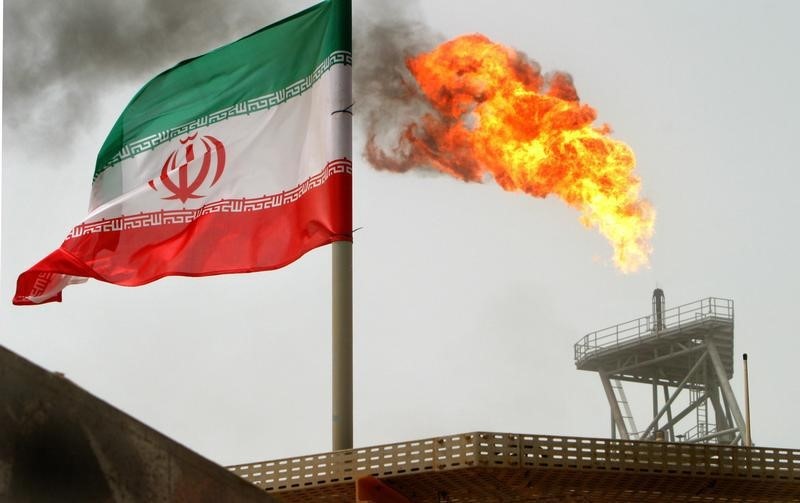
Investing.com - Israel has attacked the South Pars petrochemical plant at Asaluyeh in Iran, the country’s defense minister said on Monday, as reports suggested that mediators were pushing for a temporary ceasefire in the more than month-old war.
Tehran had previously said the facility had been struck, marking a new setback for Iran’s economic infrastructure. The site in Asaluyeh oversees roughly half of Iran’s total petrochemical production, according to Israeli Defense Minister Israel Katz.
Following a separate strike on an Iranian petrochemical facility in Mahshahr, Israel has now hit targets which are responsible for 85% of Iran’s petrochemical exports, Katz added.
Earlier, Israel’s military said Seyed Majid Khademi, the head of intelligence for Iran’s paramilitary Islamic Revolutionary Guard Corps, was killed in air strikes in Tehran on Sunday night.
Khademi is one of several Iranian leaders who have been killed in strikes since the outbreak of the conflict in late February, including Supreme Leader Ali Khamenei and national security chief Ali Larijani.
Meanwhile, fighting intensified across the Middle East. Iran responded to Israeli strikes with missile attacks, launching four rounds toward Israel early Monday. Authorities in the United Arab Emirates, Saudi Arabia and Kuwait said their air defense systems intercepted incoming strikes as well.
U.S. forces on Kuwait’s Bubiyan Island were targeted by Iran, a spokesperson for Iran’s Khatam al-Anbiya Central Headquarters said in a video statement carried by state media on Monday. Bubiyan Island is the largest in Kuwait’s chain of coastal islands, located in the northwest of the Persian Gulf.
The escalation follows fresh warnings from U.S. President Donald Trump, who said Iran must reopen the Strait of Hormuz or face major consequences. He said Tehran “won’t have any power plants and they won’t have any bridges standing” if a deal is not reached by Tuesday 8 p.m. ET.
A former Iranian foreign minister called for Arab countries to discourage Trump from hitting Iran’s power plants, arguing that the entire region would go "dark" if he did so.
Elsewhere, Iran and the United States have received a proposed framework to end hostilities and reopen the Strait of Hormuz, several media outlets reported, citing sources familiar with the discussions.
According to the Associated Press, the proposal was put together by Pakistan, Egypt and Turkey and shared with both sides overnight. The plan could take effect as early as Monday.
It outlines a two-step process, starting with an immediate ceasefire followed by negotiations toward a broader agreement.
“All elements need to be agreed today,” a source told Reuters.
Oil prices dipped in the wake of the reports, retreating from some earlier gains. However, crude prices remain elevated, as investors continued to fret over a prolonged closure to the Strait of Hormuz, a vital waterway through which roughly one-fifth of the world’s oil passes.
(Senad Karaahmetovic contributed reporting.)