
Key insights
- The article discusses the market's reaction to President Trump's "Liberation Day" tariffs a year prior, noting a significant sell-off in US stocks, particularly in tech giants like Apple and Nvidia. The key takeaway is the market's surprise and panic, leading to substantial losses. This suggests that unexpected trade policy announcements can trigger sharp, negative reactions in US equities, highlighting the market's sensitivity to trade-related news.
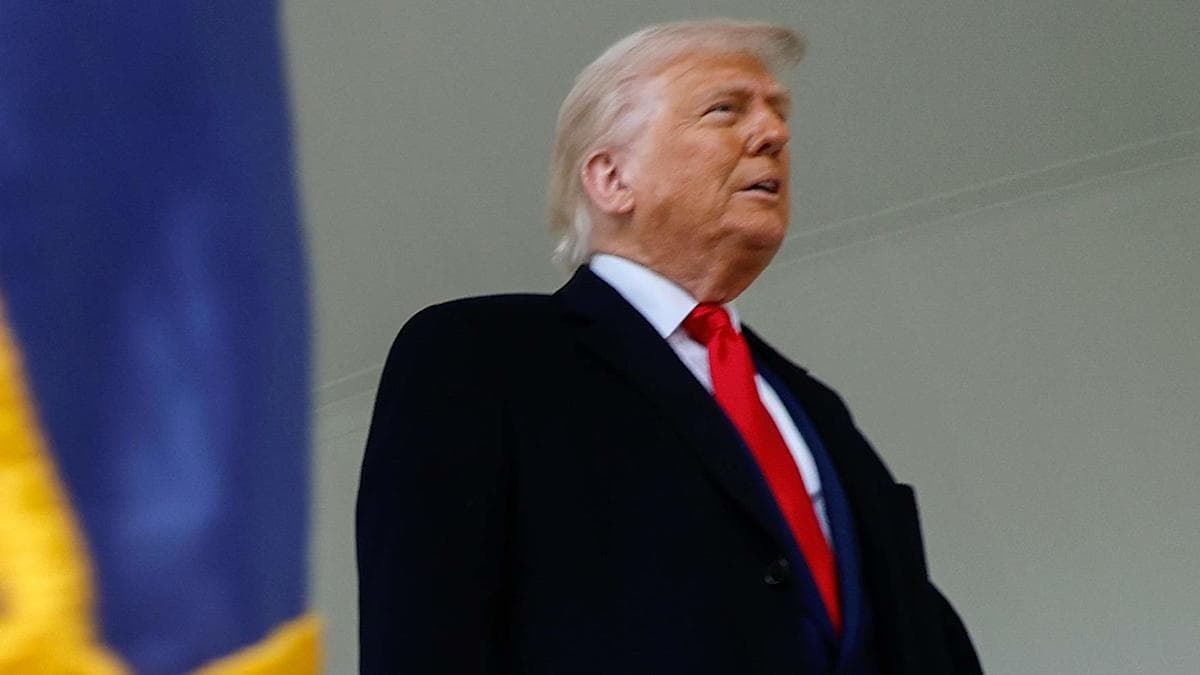
This week marks exactly one year since President Trump enacted his "Liberation Day" tariffs last April 2 as the administration took aim at US trading partners and other countries around the world.
Yahoo Finance Head of News Myles Udland sits down with Barron's Investor Circle Newsletter editor Josh Schafer, Interactive Brokers chief strategist Steve Sosnick, and StockBrokers.com director of investor research Jessica Inskip to look back on the market's (^DJI, ^IXIC, ^GSPC) reaction to US trade tariff policies and what Wall Street has learned since then.
So this was the Thursday of this same week last year, also known as the day after uh President Trump came out in the Rose Garden, surprised everyone with the scale liberation day tariffs. Uh, so I will just read here from the story. US stocks cratered on Thursday in their worst one-day sell-off since 2020, with the Dow tumbling almost 1,700 points as President Trump's surprisingly steep liberation day tariffs sent shock waves through markets. Apple stock fell 9%, Nvidia stock sell fell 7%. The Mag 7 lost $900 billion. 2 and a half trillion was wiped out of US stocks in a single day. Is there something to take from what the market did or didn't learn in that that, you know, when we get the next surprise, we may see different behavior? Or or just how have you kind of processed this last year?
I I think the one thing I kept coming back to, thinking about it as people sort of brought it up this week, was how quickly everything moved over that two-day period. Because that was Thursday. By Friday, you had another Dow down almost 2,000 day. 2200 point loss in the Dow the next day. In a full panic going into the weekend. Everyone was surprised. There are very few events where you can call and say, do you really know what's going on here? And basically everyone is just honest and says, I have no idea.
It was a lot of enthusiasm after the election and after the inauguration because of the possibility for tax cuts, for lighter regulation, etc. No one really had higher tariffs on their dance card. And yes, we were prepared for the fact that there was a tariff announcement, but those numbers as you said, they it looked like the like a dogen turn put them in put them into chat GPT and said, give me give me some tariff numbers. And so they made no sense and and so the market freaked as as I I I think it should have. What made it worse was the initial reaction from the President, from Besant, from Ludnick, and it was sort of tone-deaf because one of the other things people had banked on was a president who viewed the stock market as a barometer of his economic performance. And all of a sudden, here the market gets tanked and they're basically saying, suck it up, these are the tariffs. It wasn't until the bond market got yippy, using that using the terminology the president used that they turned it around and and whether you want to call it Taco or whether you want to call it the Trump put. I I I tend to use the ladder. Um the market the market came around and that's the less that's the takeaway though, Miles, is that now people when you when I think you have a much bigger global problem and a more intractable outcome, people are saying, wait, I don't want to miss the 9% rally that followed after the after the tariff reversal.
I agree as well. It gave us a learning that this administration, Trump 2.0 is less more caring about what's happening in the equity markets and what's more focused on the bond market. So, we saw the 10 year is absolutely where our focus began to go because as soon as the 10-year yield was spiking, that's when we saw action was taken. But what I think is interesting is we as consumers have been getting and market participants are very used to these shocks all of the sudden. It is becoming a new normal, and I think if we layer on the increased retail participation, the technology enhancements that we have, our downfalls are very quick and our recoveries are even quicker. But there is such a beautiful chart. I was trying to find it very quickly here while you guys were talking, um and I couldn't pull it up, but uh I I got it up in memory, so we'll go through that. The what I think is interesting, one of my favorite things to do with technical analysis is marry some events with support and resistance. So, if we go back to when Powell introduced, the very first introduced in the early 2020s, the idea of a restrictive environment where we were going to start with that rate hike. If you were to draw a straight line, which also goes with the 200 weekly, of where that is, that is exactly where we bottom bottomed in April. And I just think that's so interesting because tariffs was a new uncertainty that was introduced. We did not know the impact that it was going to have on ultimately earnings, inflation, but the end goal here is earnings. And so causing the immediate panic, I like to say that the the stock market has an anxious attachment style. When it doesn't understand something, it throws temper tantrums, it needs validation, it creates volatility. It's just an interesting way to think of it. And so until it had some type of certainty, which ended up in a in a Truth Social post, it's interesting that the level that we ended up bottoming at was the level that if we would have gone past, would have erased every bit of progress that markets made through that restrictive Fed environment.