
Key insights
- Cocoa futures are down due to a supply glut and dollar strength. Rising inventories and projections of future surpluses are pressuring prices. Farmgate price cuts in Ghana and the Ivory Coast signal excess supply. Demand destruction, as indicated by chocolate maker Barry Callebaut, adds to the bearish outlook.
The Primary Catalyst: A Bloated Supply Outlook Meets Renewed Dollar Strength
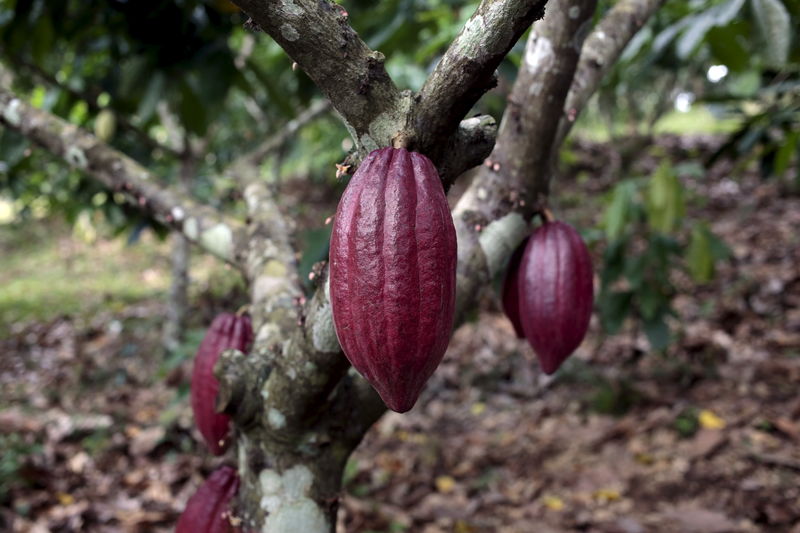
The dominant driver of today’s decline in US Cocoa Futures is the convergence of two reinforcing bearish forces: a worsening physical supply glut and a firmer US Dollar pressing on dollar-denominated commodity prices. Dollar strength weighed on cocoa prices, alongside an improving supply outlook — West African farmers reported that consistent rains have boosted pod development in cocoa trees in the Ivory Coast and Ghana, and ample supplies are also weighing on cocoa prices, as ICE cocoa inventories rose to a 7.5-month high of 2,326,443 bags. This inventory print is critical: rising certified warehouse stocks signal that physical demand is simply not absorbing available supply, a condition that mechanical selling programs and commodity trading advisors (CTAs) are programmed to exploit by adding to short positions.
The supply backdrop has been deteriorating for months. StoneX projected in late January a global cocoa surplus of 287,000 tonnes for the 2025/26 crop year and 267,000 tonnes for 2026/27. Against that structural backdrop, origin nations have been forced into aggressive price concessions. In February, Ghana reduced the official farmgate price paid to its cocoa farmers by nearly 30% for the 2025/26 season, and the Ivory Coast followed by announcing a 57% cut in the price paid to farmers for the mid-crop harvest — cuts intended to reflect lower global market prices but that may influence future planting and maintenance decisions by growers. Rather than tightening supply by discouraging future investment, these farmgate cuts in the near term signal excess supply at origin, adding immediate downward pressure to futures pricing.
Supporting Factors: Demand Destruction and Grinding Data Confirm Structural Weakness
Secondary bearish pressure stems from the most acute demand collapse the cocoa market has seen in over a decade. Barry Callebaut AG, the world’s largest bulk chocolate maker, reported a -22% decline in sales volume in its cocoa division for the quarter ending November 30, citing "negative market demand." This is not a minor blip — it reflects a structural repricing of consumer behavior in response to chocolate prices that remain elevated even as futures have cratered. The European Cocoa Association reported that Q4 European cocoa grindings fell -8.3% year-over-year to 304,470 MT, a bigger decline than expectations of -2.9% and the lowest for a Q4 in 12 years. With Asia grinding data similarly soft, the global consumption engine that once justified tight supplies has stalled. Demand is recovering far more slowly than it has after previous downturns, with part of the drag coming from reformulation, as manufacturers are simply using less cocoa in their products.
Contextual Environment: DXY Rebound, Hawkish Fed, and Geopolitical Risk-Off
Today’s macro environment provided no offset to the commodity’s decline. The dollar moved higher on Friday as weakness in stocks boosted liquidity demand for the dollar, and the ongoing conflict in the Middle East further boosted demand for the dollar as a safe haven — with higher Treasury note yields also strengthening the dollar’s interest rate differentials. This geopolitical backdrop is critical context: the US-Israel war with Iran entered its fourth week, with elevated oil prices continuing to fuel inflation fears and lowering the likelihood of a near-term Federal Reserve rate cut, with some traders now pricing in a potential rate hike toward year-end. The Iran conflict has pushed Brent crude above $108, driven safe-haven demand into the dollar, and forced the Federal Reserve to delay its next rate cut. A delayed easing cycle means a structurally firmer dollar for longer — a persistent headwind for all dollar-denominated soft commodities, including cocoa. The DXY has a strong inverse relationship with commodity prices: when the dollar strengthens, commodities priced in dollars become more expensive for foreign buyers, reducing demand and pushing prices down.
Conclusion: Convergence of Bearish Forces
The decline in US Cocoa Futures on 2026-03-23 is not an anomaly — it is the logical output of a market where every lever points the same direction. Cocoa prices have fallen nearly 70% since 2024 record highs, as demand weakness, reformulation, and farmer pressure continue to reshape the global chocolate market. On this specific session, a rebounding DXY fueled by Middle East safe-haven flows collided with confirmed ICE inventory builds, record-soft grinding data, and aggressive farmgate price cuts from the world’s two largest producers. Until demand recovery materially accelerates or a genuine weather shock disrupts West African pod development, the path of least resistance for cocoa remains lower.
This article was generated with the support of AI and reviewed by an editor. For more information see our T&C.