
Key insights
- China's Shenzhou-23 mission signals increasing competition with the US in space exploration. While not directly impacting US equities, it reflects broader geopolitical rivalry and technological advancements. Increased government spending in these areas could indirectly influence specific sectors over the long term.
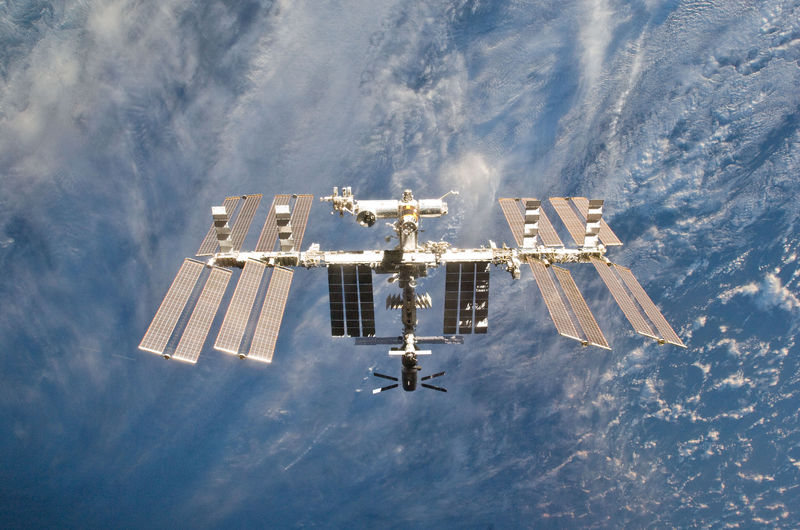
Investing.com -- China is set to launch its Shenzhou-23 mission on Sunday, sending three astronauts to the Tiangong space station in a flight that could see one crew member remain in orbit for a full year, the longest human space mission in the country’s history.
The Shenzhou-23 spacecraft is scheduled to lift off from the Jiuquan Satellite Launch Center in northwestern China aboard a Long March-2F Y23 rocket, according to the China Manned Space Agency.
The crew includes commander Zhu Yangzhu, pilot Zhang Yuanzhi, and payload specialist Li Jiaying, a former Hong Kong police inspector who will become the first astronaut from Hong Kong to take part in a Chinese space mission.
Chinese officials said one astronaut could remain aboard Tiangong for up to a year, exceeding the six-month missions that have been standard for China’s space station program since 2021. The agency said the astronaut selected for the extended stay will be determined later during the mission.
The launch comes as China advances plans to land astronauts on the moon by 2030, setting up a race with the United States, which is targeting a crewed lunar landing in 2028 under NASA’s Artemis program.
China is developing the hardware needed for its lunar ambitions, including the Long March-10 rocket, the Mengzhou spacecraft, and the Lanyue lunar lander. Officials have described recent testing of these systems as part of preparations for future crewed lunar missions.
The Shenzhou-23 mission will also conduct the first autonomous rapid rendezvous and docking procedure with Tiangong’s core module, a capability expected to support future lunar operations.
Scientists will use the mission to study the effects of long-duration spaceflight, including radiation exposure, bone density loss, and psychological stress.
China has steadily expanded its space program in recent years. In 2024, it became the first country to return samples from the far side of the moon through a robotic mission.
Beijing is also working with Russia on plans to establish a permanent lunar base by 2035.