
Key insights
- Caterpillar faces margin pressure despite a record backlog and strong order growth. While analyst revisions are positive, driven by backlog conversion, truck sales weakness and valuation concerns temper enthusiasm. CAT's performance offers insight into the broader construction and machinery sector, acting as a bellwether for economic activity. Strong order growth signals continued demand, but cost management is key to future profitability.
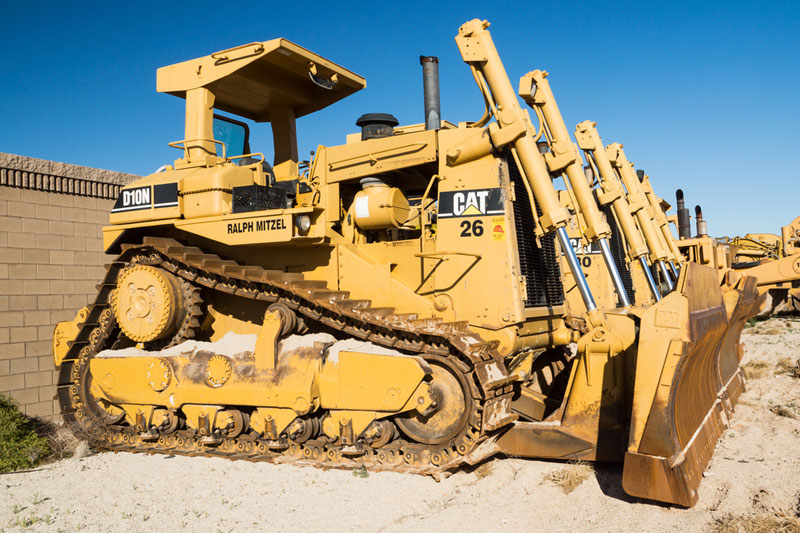
Caterpillar Inc. (NYSE:CAT) stands at a crossroads as the heavy machinery manufacturer navigates unprecedented order growth against mounting cost pressures. The company has reported a surge in backlogs exceeding $10 billion and new order growth surpassing 70% in a single quarter, marking a historic achievement in the U.S. Machinery & Construction industry. The performance raises questions about whether the equipment giant can convert strong demand into sustained profitability while managing significant headwinds from tariffs and raw material costs.
Caterpillar’s backlog has swelled to approximately $40 billion, reflecting robust demand across its product portfolio. The company experienced new orders implying a 25% increase, with dealer sales growth reaching levels not seen since the 2018-2019 period. This momentum carried through the fourth quarter of fiscal year 2025, when the company delivered results that exceeded expectations in both sales and margins.
The strength in orders comes despite mixed performance across product categories. While excavators showed year-over-year growth, truck sales declined approximately 19% on a yearly basis and 12% quarter-over-quarter. Large trucks underperformed compared to smaller units, suggesting varied demand patterns across different equipment segments. On a trailing twelve-month basis, truck sales managed a 4% increase, indicating that longer-term trends remain positive even as near-term fluctuations persist.
Analysts note that the company’s sales outlook for fiscal year 2026 sits on the higher end of projections, driven by continued end-user demand. Notably, 15 analysts have revised their earnings upwards for the upcoming period, reflecting growing confidence in execution. The raised forecasts reflect Caterpillar’s ability to convert its substantial backlog into revenue, though according to InvestingPro analysis, the stock currently appears overvalued relative to its Fair Value—a key consideration for investors evaluating entry points. For those seeking deeper valuation insights, InvestingPro offers comprehensive Fair Value analysis alongside 15+ additional ProTips for CAT.
Caterpillar has positioned power generation as a central pillar of its long-term growth strategy. The company expects to double or more its power-generation revenues by 2030, with capacity expansion across engine segments serving as the primary catalyst. By 2030, analysts project that approximately half of the Engines & Turbines segment revenue will derive from power generation, up from roughly 35% as of the second quarter of fiscal year 2025 on a trailing twelve-month basis.
The data center opportunity represents a particularly compelling growth avenue. Caterpillar could potentially triple its annual data center revenue by 2030, primarily through prime power applications. Analysts estimate that a 30% margin on this opportunity could translate to approximately a 15% increase in the company’s operating income by 2030. With the company currently generating a return on equity of 51% and maintaining an impressive track record of raising dividends for 12 consecutive years, this projection assumes successful execution of capacity expansion plans and continued growth in data center construction driven by artificial intelligence and cloud computing demands. Investors can access CAT’s comprehensive Pro Research Report on InvestingPro, which transforms complex Wall Street data into clear, actionable intelligence—one of 1,400+ US equities covered.
The company’s strategy encompasses diversification across multiple end markets, including mining, power generation, and marine applications. The plan addresses different operational modes such as prime versus backup power, though some debate exists regarding the necessity for redundancy in prime power applications. Later stages of the expansion plan include solar energy initiatives, positioning Caterpillar to participate in the broader energy transition while maintaining its core strengths in traditional power generation.
The mining equipment segment presents a nuanced picture for Caterpillar’s near-term prospects. While excavators demonstrated year-over-year growth, the broader truck category experienced significant declines. The 19% year-over-year drop in truck sales and 12% quarter-over-quarter decrease highlight softness in this important product line, though the 4% trailing twelve-month increase suggests the decline may represent a temporary adjustment rather than a structural shift.
Analysts anticipate a favorable replacement curve beginning in 2026, potentially accelerated by changes in the interest rate environment. Mining equipment typically operates on long replacement cycles, and the aging fleet in the field creates natural demand for new units. The extent of this replacement ramp-up remains subject to debate, with differing views on how quickly mining companies will refresh their equipment fleets given commodity price volatility and capital allocation priorities.
The mining sector’s performance ties closely to global economic conditions and commodity demand, particularly from major markets such as China. Infrastructure spending, construction activity, and resource extraction all influence demand for Caterpillar’s products. The company’s exposure to these cyclical end markets creates both opportunity and risk, depending on macroeconomic trajectories and policy decisions in key geographies.
Caterpillar faces significant headwinds to profit margins despite strong revenue growth. Tariffs and raw material costs represent primary concerns, with these factors placing the company’s profit margins on the lower end of expectations even as sales projections remain elevated. The tension between top-line growth and bottom-line performance has brought earnings per share estimates closer to consensus levels, tempering some of the enthusiasm generated by record backlogs.
The company’s fiscal year 2026 sales growth projections sit at the high end of estimates, yet profit margin expectations remain constrained. This dynamic reflects the reality that Caterpillar cannot fully pass through cost increases to customers in all cases, particularly in competitive segments or when dealing with long-term contracts. The margin barriers from tariffs and raw material costs currently limit upside potential, according to analysts tracking the stock.
Caterpillar has demonstrated margin resilience in recent quarters, maintaining profitability despite cost pressures. The company generated diluted earnings per share of $20.08 over the last twelve months, with EBITDA reaching $14.6 billion. The company’s scale and market position provide some pricing power, and operational efficiency initiatives help offset inflation in input costs. Free cash flow remains quite strong even with significant capital investments in capacity expansion, suggesting that the company maintains financial flexibility to navigate the current environment while funding growth initiatives.
Valuation discussions around Caterpillar stock often focus on the timing of earnings growth. Trading at a P/E ratio of 44, the stock reflects premium expectations for future performance. Analysts observe that thematic elements such as power generation expansion and data center opportunities are expected to drive more future earnings growth compared to near-term results. This creates a tension between the company’s current valuation and the timeline for realizing the full benefit of strategic initiatives. InvestingPro subscribers gain access to advanced valuation tools, including peer comparison features and company health scores, to better assess whether CAT’s premium multiple is justified.
The stock’s valuation reflects strong end market prospects combining thematic growth opportunities with steady replacement demand. Despite impressive one-year price returns exceeding 159%, these factors underpin long-term growth potential, yet near-term margin pressures and the extended timeline for some growth initiatives create debate about appropriate valuation multiples. Investors must weigh the company’s solid market position and growth prospects against execution risks and the time required to fully realize strategic plans.
Earnings per share estimates for the first fiscal year range from approximately $17.55 to $22.42, while second fiscal year projections span from $20.49 to $26.22. The wide range in estimates reflects uncertainty about the pace of margin recovery and the timing of revenue conversion from the substantial backlog. The company’s market capitalization has fluctuated between roughly $247 billion and $311 billion across the analysis period, indicating significant stock price movement as investors reassess growth prospects and valuation.
The compression of profit margins represents a fundamental challenge to Caterpillar’s earnings growth trajectory. Tariffs on imported materials and components increase input costs that the company cannot always pass through to customers, particularly on existing contracts or in highly competitive market segments. Raw material costs for steel, copper, and other essential inputs have remained elevated, creating persistent pressure on gross margins.
The company’s fiscal year 2026 outlook illustrates this tension, with sales projections at the high end of estimates while profit margins sit at the low end. This suggests that revenue growth alone may not translate to proportional earnings expansion. If cost pressures intensify or if competitive dynamics prevent price increases, Caterpillar could see earnings per share growth lag behind revenue gains. The substantial backlog provides revenue visibility but does not guarantee margin protection, especially if contracts were signed at prices that do not reflect current cost structures.
Manufacturing efficiency and operational improvements can only offset so much cost inflation. If tariff policies expand or if raw material costs spike due to s