
Key insights
- The US claims to have destroyed over 90% of Iran's naval mine stockpile, but Iran maintains control over the Strait of Hormuz. This ongoing tension could lead to increased oil prices and further geopolitical instability, posing a slight risk to US equities.
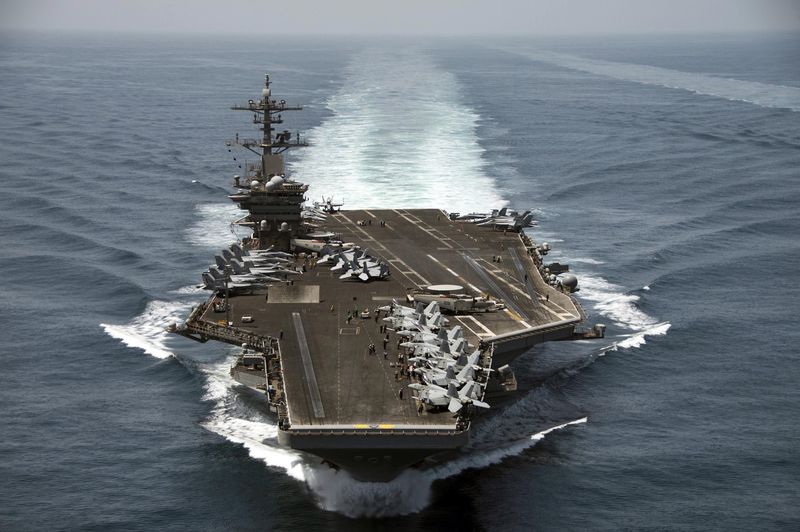
Investing.com -- The US has eliminated more than 90% of Iran's approximately 8,000 naval mines through over 700 airstrikes, US Central Command chief Admiral Brad Cooper told lawmakers on Thursday. The written statement did not address Tehran's ongoing control of the Strait of Hormuz.
Cooper said the strikes destroyed Iran's "once-massive inventory" of sea mines but did not specify how many mines were laid in the strait compared to those destroyed in storage or aboard vessels.
Cooper emphasized the destruction of traditional Iranian military assets while minimizing Iran's asymmetric capabilities, including drone attacks on ships and regional energy facilities.
Access breaking news faster with institutional-grade feeds on InvestingPro — get 50% off now.
"Iran retains nuisance capability – harassment, low-end drone and rocket attacks, and residual proxy support – but it no longer possesses the means to threaten major regional operations or to deter US freedom of action in the air or maritime domains," Cooper stated.
Iranian threats against commercial vessels have effectively closed the waterway for two and a half months, driving up global energy prices and increasing pressure on President Donald Trump to end the conflict.
Defense Secretary Pete Hegseth and other officials have repeatedly highlighted the number of targets struck, now exceeding 13,000, and Iranian assets destroyed to demonstrate Operation Epic Fury's tactical success, despite Tehran's continued control of the waterway.
Cooper submitted statistics before his first of two Congressional appearances before defense policy committees, detailing Operation Epic Fury's scope against Iran, which is now in a ceasefire Trump described earlier this week as being on "massive life support."
Cooper reported that across more than 10,200 sorties and over 13,500 strikes, US forces targeted the full range of Iran's power projection capabilities. The campaign damaged or destroyed over 85% of Iran's ballistic missile, drone and naval defense industrial base, with more than 1,450 strikes on weapons manufacturing facilities setting back Iran's ability to build and stockpile ballistic missiles and long-range drones by years.
More than 2,000 strikes against Iran's command-and-control structures created leadership vacuums and internal confusion, with reports of desertions, personnel shortages and regime attempts to enforce discipline through arrest and execution, the report said.
An integrated air defense system US Central Command established at al-Udeid Air Base in Qatar enabled regional allies to intercept over 6,000 one-way attack drones and more than 1,500 ballistic missiles aimed at US forces, Israel and Arab partners, according to the report.