
Key insights
- Fed President Paulson highlights increased risks to both inflation and growth due to the Iran war. She expresses concern about persistent inflation above the 2% target and suggests a more cautious approach to monetary policy in light of potential overheating, especially given the uncertainty surrounding AI-driven productivity gains. This leans bearish as it signals a potential for tighter policy even with growth concerns.
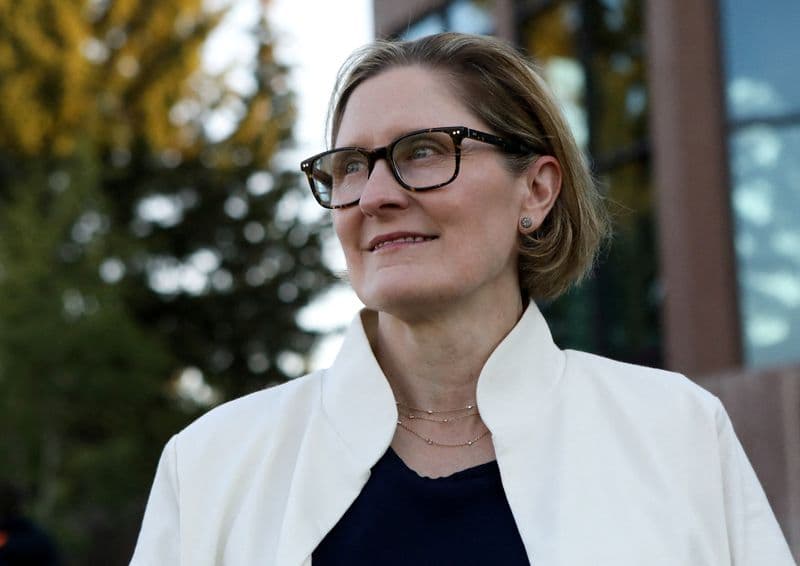
NEW YORK, March 27 (Reuters) - Philadelphia Federal Reserve President Anna Paulson said on Friday the Iran war is creating challenges for the U.S. economy, while stopping short of saying what that might mean for near-term changes in monetary policy.
"The conflict in the Middle East has created new risks to both inflation and growth," Paulson said in the text of a speech to be delivered at an event held by the San Francisco Fed.
She noted that inflation has exceeded the U.S. central bank's 2% target for an extended period despite "significant progress" to lower price pressures. Paulson added that longer-run inflation expectations are "consistent" with the that goal, but added "they may also be a little more fragile."
Paulson's comment on the current economic challenges was delivered in remarks that mulled how the rise of artificial intelligence technologies might affect the future of the economy and how the Fed might respond, noting the uncertainty of understanding in real time what is driving the current jump in productivity.
She explained that a jump in economic growth that could be driven by AI-driven productivity gains would be tough for the central bank to respond to, given above-target inflation.
"If inflation were at the 2% target, I would feel more comfortable being patient, keeping monetary policy on hold and waiting to see if a hypothetical growth surge puts upward pressure on inflation," Paulson said.
"But if inflation is above 2% and has been for some time, I would be more cautious," she said. "I would be inclined to weight the possibility of overheating more heavily in determining appropriate policy."
(Reporting by Michael S. Derby; Editing by Paul Simao)