
Key insights
- Rising jet fuel prices, spurred by Middle East tensions, pressure airline profitability. While direct fare increases are challenging, airlines are cutting capacity to stabilize margins. US airlines like United and Delta are reducing growth plans. Airlines with strong hedging positions (e.g., Ryanair, Lufthansa) and healthy balance sheets are better positioned to weather the storm. Overall, this creates a slight drag on the broader market due to potential negative impacts on travel and related sectors.
Investing.com -- A recent report from Bernstein reveals that fuel prices have surged significantly following conflict in the Middle East, with European jet fuel now trading between $1,500 and $2,000 per ton.
The price spike represents more than double the levels seen before the attacks on Iran last month. Since fuel typically accounts for 20% to 40% of airline revenues, the analysts warn that the industry is being pushed toward operating losses absent significant fare increases or hedging relief.
While many carriers have announced fare hikes, the report suggests that passing these costs directly to passengers is difficult, as modern revenue systems prioritize customer willingness to pay over actual input costs.
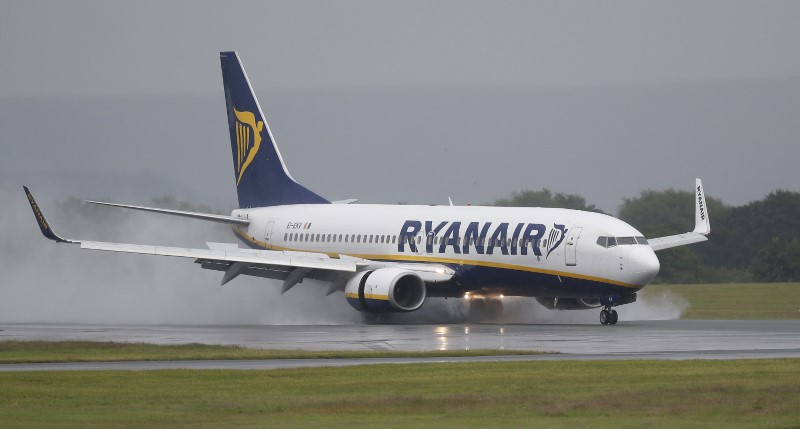
The impact of the rising costs varies significantly based on an airline’s financial health and hedging strategy. Bernstein highlights that carriers like Ryanair and Lufthansa are currently the best protected, holding 2026 hedge ratios of approximately 80% and 77%, respectively.
In contrast, others, such as IAG and Air France-KLM, are more exposed with ratios closer to 62%. The resilience of these companies is further dictated by their balance sheets.
The data shows Ryanair and easyJet maintain advantageous net cash positions, whereas Air France-KLM and Wizz Air face higher pressure due to significant leverage.
Rather than direct price hikes, the report identifies capacity adjustment as the primary mechanism for margin stability.
When fuel prices rise, airlines logically reduce supply to eliminate unprofitable flights, which tightens the market and forces average fares higher as low-priced seats are removed.
We are already seeing this trend materialize: United Airlines has announced a 5% reduction in growth plans, while Delta and Lufthansa have cut theirs by 3.5% and 1%, respectively.
Aviation remains a highly commoditized industry, making structural tailwinds essential for survival, according to the Bernstein assessment.
In the long-haul sector, the North Atlantic market remains the most rational, with capacity typically responding in sync with fuel costs.
Conversely, Middle Eastern carriers often maintain expansion plans regardless of fuel prices due to strategic national objectives.
As elevated fuel prices persist, the report expects the competitive gap to widen, as lower-margin and higher-leverage airlines may be forced into deeper capacity cuts while IAG and Ryanair leverage their superior unit economics.