
Key insights
- An Iranian drone strike ignited Kuwait Petroleum's headquarters, escalating regional energy tensions after prior attacks on refineries. With the Strait of Hormuz traffic already limited, this shift to targeting administrative centers signals a move towards economic warfare. This disruption to oil supply chains poses a significant risk to global energy prices and could negatively impact US equities due to inflationary pressures and economic uncertainty.
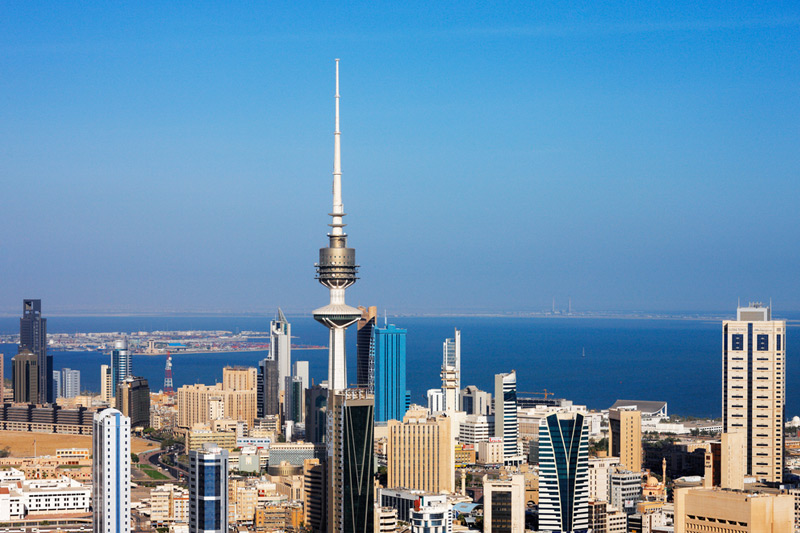
Investing.com -- The regional energy crisis escalated sharply early Sunday as a targeted Iranian drone strike set fire to the headquarters of Kuwait Petroleum Corp. (KPC) in Kuwait City. The facility, which also houses Kuwait’s Ministry of Oil, was evacuated as emergency crews battled the blaze.
This latest assault marks a significant expansion of Tehran’s "target list," shifting focus from coastal refineries to the administrative and political heart of the Gulf’s energy leadership.
The strike on KPC headquarters follows a series of aerial bombardments over the past week targeting the Mina Al-Ahmadi and Mina Abdullah refineries, as well as the country’s primary international airport.
KPC officials confirmed that the "oil sector leadership" is currently coordinating with security forces to assess the structural damage and ensure the safety of personnel.
The timing of the attack appears to be a direct retaliation for an Israeli Air Force strike on Iran’s Mahshahr petrochemical complex earlier on Saturday.
Hours before the drones reached Kuwait City, Iran’s semi-official Fars news agency published an updated "target list" that now includes critical civilian infrastructure, such as electrical, water, and steam plants, alongside previously targeted oil, gas, and chemical assets.
Market analysts are closely watching the inclusion of Kuwait’s Petrochemical Industries Company (PIC), a major fertilizer and polymer manufacturer, on Tehran’s expanded hit list.
Given that the Strait of Hormuz is already effectively closed to 90% of its normal traffic, the systematic destruction of administrative hubs and secondary chemical processors threatens to paralyze the remaining operational capacity of the Gulf Cooperation Council (GCC) states.
The transition from attacking "oil at sea" to "oil leadership on land" suggests that Tehran is moving toward a total-war footing against its neighbors’ economic foundations.
If administrative command-and-control centers like the KPC headquarters remain under fire, the ability of Gulf nations to manage emergency repairs and coordinate alternative export routes will be severely compromised, sustaining the "war-risk premium" well into the second quarter.