
Key insights
- Volkswagen plans to cut 50,000 jobs in Germany by 2030 to offset high domestic costs and declining export competitiveness. The company is shifting to a decentralized manufacturing model amid rising competition from Chinese EV manufacturers and heavy investment in EV platforms. VW's cautious financial outlook, with a projected 4% operating return, reflects these challenges. While not directly impacting US equities, it signals broader pressures on global automakers and potential ripple effects on supply chains.
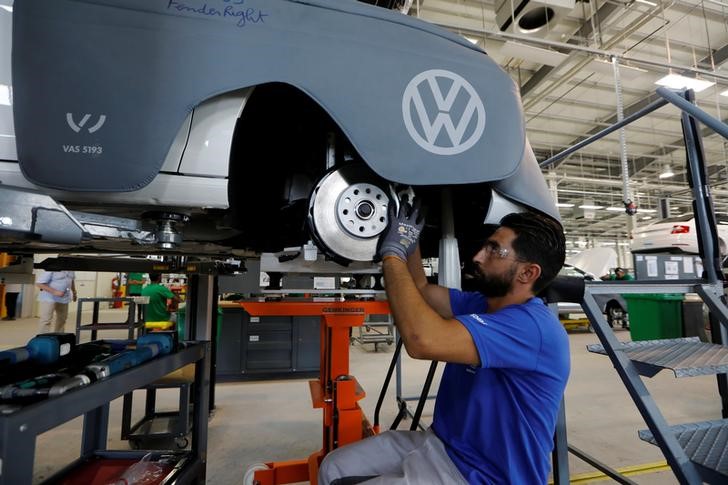
Investing.com -- Volkswagen AG (ETR:VOWG) will maintain its aggressive restructuring trajectory despite a rising order backlog, as Europe’s largest automaker moves to insulate its margins from a high-cost domestic base. Chief Executive Officer Oliver Blume told the Bild am Sonntag newspaper that the group is implementing "clear manufacturing cost targets" across its global production network, spanning Germany, Europe, and China.
The strategy aims to eliminate expensive overcapacity and realign the firm’s industrial footprint with a rapidly fragmenting global market, where traditional export models from Germany are facing diminishing returns.
A central pillar of the turnaround remains the reduction of approximately 50,000 jobs in Germany by 2030, a move Blume defended as a necessary offset for high domestic labor and energy costs. The CEO noted that the previous reliance on building vehicles in Germany for global export has become unsustainable as regional economic dynamics shift.
To counter the current headwinds, the group is intensifying its focus on productivity gains, aiming to streamline operations in a home market currently burdened by what Blume described as excessive regulation and uncompetitive energy pricing.
The urgency of the restructuring is underscored by Volkswagen AG’s cautious financial outlook, with the firm forecasting an operating return as low as 4% for the current year. The projection reflects the combined impact of heavy investment in electric vehicle (EV) platforms and intensifying competition from lower-cost Chinese manufacturers.
As the group navigates these headwinds, the rigid application of plant-specific cost targets is intended to ensure that capital expenditure remains disciplined and aligned with localized demand patterns.
The transition marks a definitive shift toward a more decentralized manufacturing model. As the traditional export-led growth strategy is no longer viable, the success of the current overhaul will depend on the group’s ability to lower its breakeven point while defending its market share in the increasingly crowded EV sector.