
Key insights
- Airline stocks face pressure from rising fuel costs, potentially leading to suspended FY26 guidance. Q1 earnings impact may be cushioned by fuel inventory, but performance will vary across carriers. United Airlines may outperform due to labor factors, while American Airlines is more vulnerable. The key question is whether airlines can pass on higher costs to consumers amid a maturing travel boom.
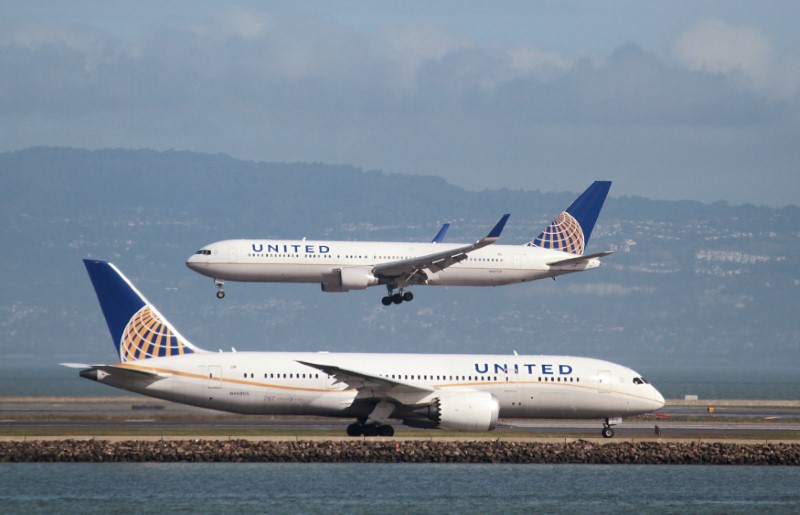
Investing.com -- Major U.S. airlines are approaching a critical inflection point as the industry grapples with a sudden spike in energy costs that threatens to upend full-year profitability. According to a research note from UBS, several carriers are expected to issue mid-quarter updates this week, with analysts predicting a widespread suspension of fiscal year 2026 guidance.
Strong demand and rising Revenue Per Available Seat Mile (RASM) provided a tailwind early in the quarter, but the "significant uncertainty" surrounding fuel prices for the remainder of the year has shifted the focus toward a defensive posture.
Despite the recent volatility, the immediate impact on first-quarter earnings may be less severe than the headline fuel surge suggests. UBS analysts point out that airlines typically maintain a two-week fuel inventory, meaning the March price spike will likely only affect approximately 15 days of the current reporting period.
The report notes, "This should cushion the drag to Q1 EPS," suggesting that most carriers will still manage to land within the mid-point of their previous guidance ranges.
Performance is expected to be bifurcated across the sector. United Airlines Holdings Inc (NASDAQ:UAL) is seen as having potential upside due to a lack of a new flight attendant contract, which, combined with higher RASM, could offset fuel pressures.
Conversely, American Airlines Group (BMV:AAL) faces higher sensitivity to fuel costs, potentially pushing its earnings toward the lower end of its guide. Meanwhile, Delta Air Lines Inc (NYSE:DAL) and Alaska Air Group Inc (NYSE:ALK) are projected to remain relatively stable near their original targets.
The defining question for the industry in 2026 is the extent to which the higher operational costs can be passed on to the consumer. The market is closely monitoring airline commentary regarding fare hikes, as the post-pandemic travel boom matures into a more cost-sensitive environment.
UBS suggests that demand has remained robust through the quarter, but the ability to maintain "pricing power" in the face of triple-digit oil prices remains the primary risk to the sector’s recovery.
Institutional investors see the current decline in airline equities raising the question of whether the sector is approaching a cyclical bottom. Historically, airline stocks have struggled to gain altitude during periods of sustained energy inflation unless accompanied by aggressive capacity discipline.
As management teams retreat from long-term forecasting to navigate the "macro fog," the sector’s performance will likely remain tethered to the daily fluctuations of the Brent crude benchmark.