
Key insights
- A Barclays report projects the humanoid robot market could reach $200 billion by 2035, driven by AI, robotics, and battery tech advancements. Humanoids are designed to operate in human-centric environments, offering versatility across sectors like manufacturing, logistics, and healthcare. Aging populations and labor shortages will further fuel demand. While positive long-term, the immediate impact on US equities is limited.
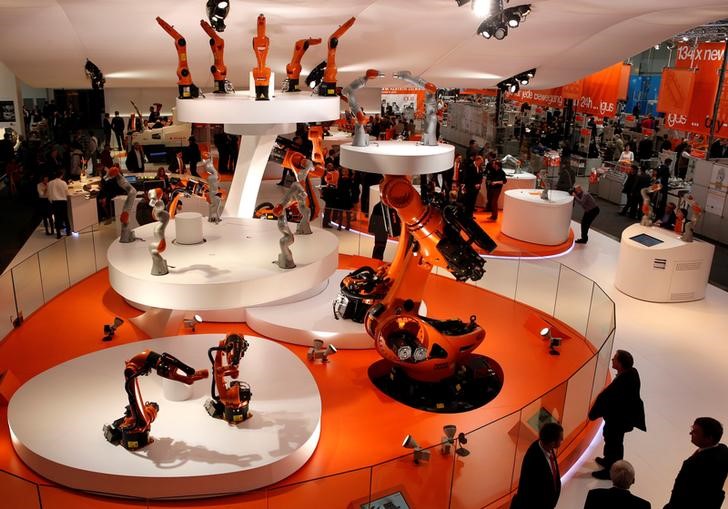
Investing.com -- Humanoid robots could become a market worth as much as $200 billion by 2035 as advances in artificial intelligence, robotics, and battery technology accelerate adoption across industries, according to a Barclays report.
The report describes humanoids as the next phase of automation, following industrial machinery and software-based AI. Unlike traditional robots designed for specific tasks, humanoids are built to operate in environments created for humans, using existing tools, buildings, and workflows without requiring significant infrastructure changes.
A key advantage of humanoid robots is their ability to work across a broad range of settings, from factories and warehouses to hospitals, hotels, retail stores, and homes. The report notes that much of the world’s physical infrastructure and training data is already centered around human activity, making human-like robots a practical design choice.
Demand is expected to be supported by aging populations, urbanization, and labor shortages in sectors such as manufacturing, logistics, agriculture, healthcare, and elder care. Changing workforce preferences are also making it more difficult to fill physically demanding jobs, creating additional opportunities for automation.
The report identifies installation and repair, manufacturing, construction, warehousing, and logistics as the sectors most suited to early humanoid adoption. Service industries, including healthcare, hospitality, and household applications, are expected to follow as the technology matures.
Humanoid robots rely on what the report calls the "Three Bs" - brains, brawn, and batteries. Brains include AI software, semiconductors, and sensors, while brawn consists of actuators and mechanical systems that enable movement. Batteries provide the power needed to operate both onboard computing systems and physical components.
Production costs have fallen sharply over the past decade, dropping from roughly $3 million per unit to around $100,000 today. Chinese manufacturers have achieved even lower costs in some cases through vertically integrated supply chains and large-scale production.
Industry deployment is accelerating, with installations estimated at around 2,000 units in 2024, 15,000 units in 2025, and roughly 60,000 units in 2026. China currently accounts for about 85% of global deployments, supported by strong manufacturing capabilities and government backing.
The report estimates the humanoid robotics market is currently worth about $2 billion to $3 billion and could grow to as much as $200 billion by 2035. It also sees a broader physical AI ecosystem, including autonomous vehicles, drones, and advanced robotics, reaching up to $1 trillion over the same period.
For investors, potential exposure includes humanoid manufacturers, component suppliers, automotive companies involved in robotics, and robotics-focused exchange-traded funds.