
Key insights
- NY Fed President John Williams acknowledges increased uncertainty from the Middle East war, particularly regarding energy prices' potential impact on inflation and economic slowdown. He believes current monetary policy is well-positioned to balance these risks, noting the delayed pass-through of energy prices to broader inflation. He downplays systemic risk from private credit issues, suggesting a slightly negative influence on US equities due to persistent inflation concerns.
By Michael S. Derby
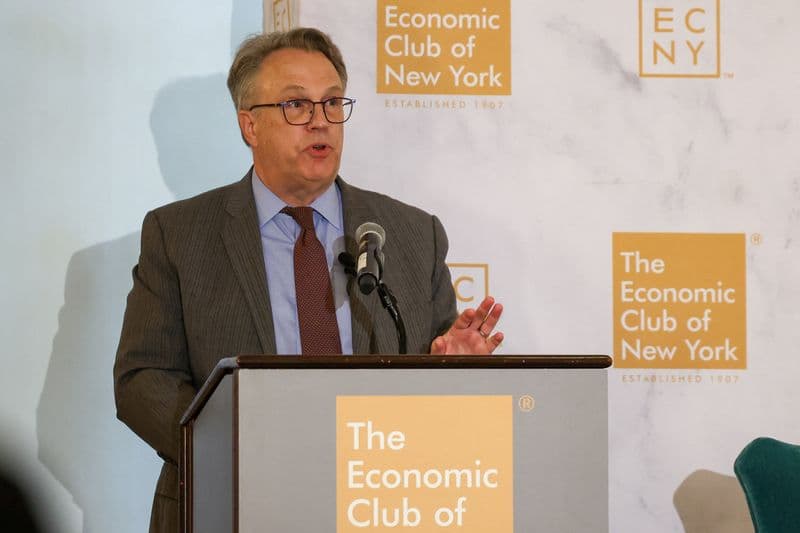
April 2 (Reuters) - Federal Reserve Bank of New York President John Williams said monetary policy is “well positioned," as he expects surging energy prices will take some time to affect the economy.
The Middle East war means “the uncertainty and the risks have increased, but they've kind of increased in both directions: both higher risks of higher inflation but also greater risks of economic slowdown,” Williams said in an interview with Fox Business.
“We want to balance those risks,” he said. “I think monetary policy, with the actions we took last year and where we are today, is actually well positioned to keep those risks in balance.”
His comments largely mirror remarks made on Monday in an appearance in Staten Island, New York.
The most tangible effect on the U.S. from the war is surging energy prices, which could push up inflation and depress spending, though that effect has not yet shown up in economic data.
He noted the pass-through of energy prices “typically takes months or maybe a year” to affect other prices.
As for the job market, Williams said the low-hire, low-fire hiring sector with low and stable unemployment looks poised to stay in place for now.
Williams also pushed back against the idea that troubles in private credit could cause deep woes for the financial system. While developments there are being watched, “I don't see it as a systemic risk to our system right now,” he said.
(Reporting by Michael S. Derby; editing by David Gaffen)