
Key insights
- Asian markets showed mixed performance, with Japan and South Korea reaching record highs driven by a Wall Street tech rally, particularly in AI and semiconductors. SK Hynix and Samsung Electronics saw significant gains. However, persistent concerns over potential US-Iran conflict and volatile oil prices capped broader gains and weighed on Chinese and Hong Kong markets. US stock futures traded higher, indicating continued positive sentiment from the US tech sector's performance.
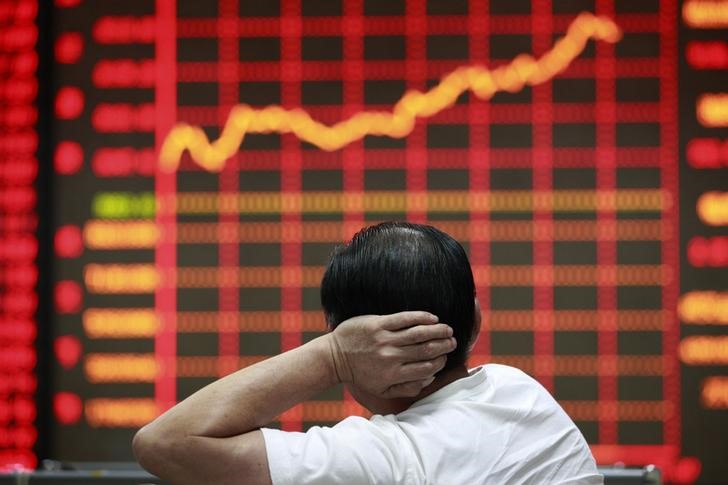
Investing.com-- Asian stock markets were mixed on Wednesday, with Japanese and South Korean shares scaling fresh record highs on the back of Wall Street’s technology-driven rally, although uncertainty over a possible U.S.-Iran peace agreement kept broader investor sentiment cautious.
Wall Street’s S&P 500 and NASDAQ Composite closed at all-time highs overnight.
U.S. stock index futures traded marginally higher during Asian hours on Wednesday.
Get premium Asia stock market insights with analyst comments on InvestingPro
Japan’s Nikkei 225 climbed as much as 2.2% to a new record high of 66,428.81 points, while the broader TOPIX index traded flat.
South Korea’s KOSPI surged 5% to a fresh record of 8,457.9 points, as an AI-fuelled rally in chipmakers gathered pace.
Shares of SK Hynix (KS:000660) jumped nearly 14%, pushing the company’s market capitalisation above $1 trillion for the first time and joining rivals Samsung Electronics (KS:005930) and Micron Technology (NASDAQ:MU) in the trillion-dollar club.
Samsung Electronics shares also hit a record high, climbing as much as 8%, after unionised workers approved a contentious wage and bonus agreement that averted a potentially disruptive strike.
Technology shares across the region continued to benefit from optimism surrounding artificial intelligence spending after Micron Technology rallied sharply on Wall Street following a bullish brokerage upgrade.
Still, gains in regional equities were capped by concerns that renewed U.S. military strikes on Iranian targets could derail negotiations aimed at ending the Middle East conflict.
Oil prices remained volatile, with Brent crude hovering near $99 per barrel amid continued supply disruptions through the Strait of Hormuz.
China’s Shanghai Composite fell 1.1%, while the blue-chip Shanghai Shenzhen CSI 300 index eased 0.7%.
Hong Kong’s Hang Seng index slipped 0.8% despite chipmaking stocks advancing.
India’s Nifty 50 ticked 0.1% higher. Singapore markets were closed for a public holiday.
Australia’s S&P/ASX 200 edged up 0.2% after data showed underlying consumer prices rose 3.4% year-on-year in April, from 3.3% in March, reinforcing views that the Reserve Bank of Australia may keep interest rates elevated for longer.
Elsewhere, the Reserve Bank of New Zealand kept its official cash rate unchanged at 2.25% but signalled that future rate hikes would likely be needed sooner and by more than previously expected due to mounting inflation pressures from higher energy costs.
The central bank warned inflation could peak at 4.3% later this year as the Middle East conflict drives up fuel and petrochemical prices, even as economic growth weakens.
New Zealand’s NZX 50 index rose 0.9%.
Globally, investors awaited further developments in Middle East diplomacy and upcoming U.S. inflation data on Thursday.
ProPicks AI evaluates MU alongside thousands of other companies every month using 100+ financial metrics. Using powerful AI to generate exciting stock ideas, it looks beyond popularity to assess fundamentals, momentum, and valuation. The AI has no bias—it simply identifies which stocks offer the best risk-reward based on current data with notable past winners that include Super Micro Computer (+185%) and AppLovin (+157%). Want to know if MU is currently featured in any ProPicks AI strategies, or if there are better opportunities in the same space?