
Key insights
- March payrolls are expected to rebound to 60k after a weak February, with the unemployment rate holding steady. The Fed is weighing the modest hiring environment against rising inflation. Manufacturing is showing signs of strength. Stronger-than-expected data could support a hawkish Fed stance, while weaker data may signal a slowing economy. Overall, the report is expected to have a moderately positive impact on US equities.
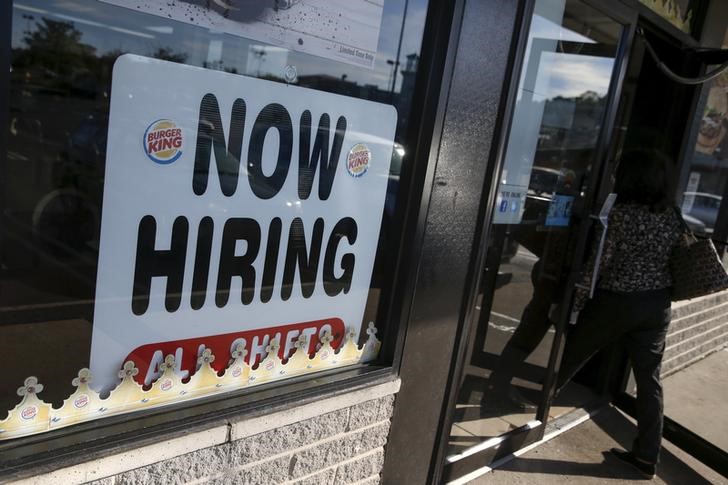
Investing.com -- The U.S. employment landscape is expected to show signs of a modest "thaw" in March, as economists project a rebound following one of the sharpest payroll pullbacks since the pandemic. According to the median estimate of a Bloomberg survey, nonfarm payrolls are forecast to rise by 60,000 for the month, reversing a 92,000 decline in February.
The unemployment rate is projected to hold steady at 4.4%, reflecting a labor market that maintains a baseline of resilience despite a lack of significant hiring momentum.
The anticipated March bounce-back is partly attributed to the resolution of temporary drags. Healthcare payrolls are expected to move higher following the conclusion of a strike involving over 30,000 Kaiser Permanente employees.
Additionally, analysts are looking for a recovery in the construction and leisure sectors, which suffered from weather-related volatility in the previous month. Bloomberg Economics offers a slightly more optimistic outlook, penciling in an 80,000 gain, a figure seen as sufficient to keep the unemployment rate stable amid current labor-force growth trends.
The March labor data arrives alongside critical retail sales figures, which are projected to show that consumer demand held up through February. Excluding automobile dealers and gasoline stations, economists anticipate a 0.3% advance in purchases.
Still, the endurance of consumer resilience is being tested by renewed inflationary pressures. Federal Reserve policymakers are currently weighing the modest hiring environment against an undesired pickup in inflation fueled by surging energy costs.
Across the U.S., the manufacturing sector is showing signs of structural firming. The Institute for Supply Management’s March manufacturing index is forecast to show a third consecutive month of expansion, the first such streak since 2022.
The domestic recovery contrasts with a more turbulent global backdrop; manufacturing PMI readings across Asia and Europe are expected to reflect the impact of surging gasoline prices and disrupted supply chains.
Consumer price growth in the Eurozone is projected to have jumped by 0.7 percentage points to 2.6% this month, the largest surge since 2022.
As Fed Chair Jerome Powell prepares for a moderated discussion at Harvard University this Monday, investors will be listening closely for clues on how the central bank intends to balance the emerging stagflationary risks.
Market participants are wondering whether the durability of U.S. demand can offset the cooling effect of higher borrowing costs and energy-led price spikes through the second quarter.