
Key insights
- Oil prices spiked after the U.S. ordered a naval blockade of Iranian ports, disrupting global oil supply. This negatively impacts European airline stocks due to increased fuel costs. The situation introduces inflationary pressure and geopolitical uncertainty, posing a bearish signal for U.S. equities, particularly in the transportation sector, as higher oil prices can dampen consumer spending and economic growth.
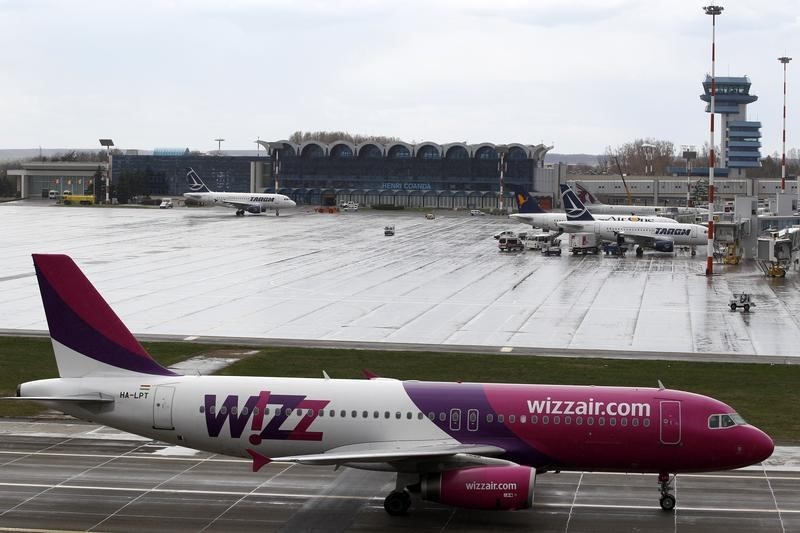
Investing.com -- European airline stocks fell between 2.7% and 7.7% on Monday as Brent crude oil surged 8% to $102.78 a barrel, as of 05:00 ET (09:00 GMT), pressuring carriers including Ryanair, IAG, Lufthansa, Air France-KLM, easyJet and Wizz Air.
Brent hit an intraday high of $103.49 a barrel. U.S. crude WTI rose 7.2% to $96.03.
U.S. President Donald Trump ordered the Navy to blockade Iranian ports after ceasefire talks with Iran collapsed over the weekend in Pakistan.
U.S. Central Command said the blockade of maritime traffic entering and leaving Iranian ports would begin at 10:00 ET Monday, narrower in scope than Trump’s earlier threat to block all vessels passing through the Strait of Hormuz.
Vice President JD Vance led the U.S. delegation in Pakistan. He left early Sunday after 21 hours of talks without an agreement.
Iran’s nuclear activities, the reopening of Hormuz and Tehran’s support for proxy groups including Lebanon’s Hezbollah were among the unresolved issues.
Iran said it had no plans for further nuclear talks with the United States. Trump said he did not care whether Iran returned to negotiations.
The Wall Street Journal reported that Middle Eastern governments were working to arrange further talks between Washington and Tehran.
Iran had blocked Hormuz since late February, cutting off roughly 20% of the world’s oil supply. The blockade has contributed to sustained disruption in oil markets.